The Real
The Real
Threat Intel
Forget the noise. Here's what actually matters in cybersecurity—threats that are happening today.


- SIDENOTE
REAL THREATS. VERIFIED DATA.
NO VENDOR SPIN.
Engaged Research
RESEARCHERS
ANALYSTS. OPERATORS.
- WHAT MAKES UP THE BRIEFING?
[01]
Blogs and research from practitioners operating in the field. No marketing agendas, just knowledge that comes from real work.
[02]
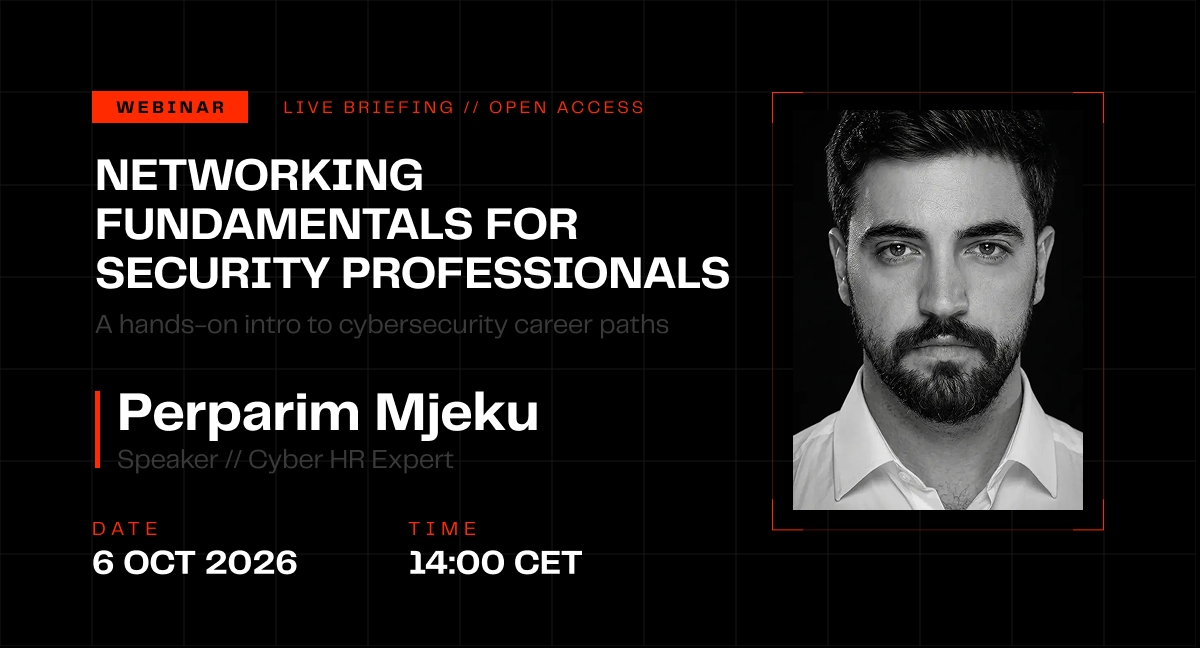
Live webinars covering a wide range of topics hosted by researchers and operators. Open to everyone, no prerequisites.
[03]
Independent, practitioner-driven content spanning disciplines, industries, and borders. Something here whether you contribute or just follow along.
Live threat landscape.
THREATS TRACKED. INTELLIGENCE VERIFIED. UPDATED REGULARLY.
STORIES & UPDATES
Real World Incidents, Breakdown, and Offensive Research — Straight from the Field.
BLOG
Agentic AI systems often treat tool descriptions as context, not just documentation. Malicious or overly permissive metadata can skew tool selection, expand data sharing, suppress security alerts, or influence downstream actions.
BLOG
An AI application can be compromised while every API returns 200 OK. Standard application logs tell you what code did. LLM security logs tell you what context caused the AI system to act.
BLOG
This blog details how attackers exploit Unconstrained Delegation in Active Directory to achieve domain takeover. You'll see a step-by-step breakdown of capturing a Domain Controller's TGT, why it's critical, and, of course, learn actionable steps to prevent this threat.
Unconstrained delegation is a legacy Active Directory feature that allows specific systems or services to impersonate users across the domain, allowing easier authentication between services. However, when left enabled on a compromised machine or misconfigured, it provides attackers a straightforward path to complete domain compromise. By coercing a privileged system like the Domain Controller into authenticating against a compromised host, attackers can capture TGTs (Ticket Granting Tickets).
Capturing these TGTs enables attackers to impersonate any user or system in the domain, gaining unrestricted access to sensitive resources and allowing devastating attack techniques such as credential dumping, DCSync, and persistence through Golden Tickets. This blog provides a detailed, practical breakdown of attackers' exact methods to exploit this scenario. Additionally, it covers robust, actionable strategies to identify, mitigate, and prevent Unconstrained Delegation abuses within your Active Directory enterprises.
BLOG
If you work in cybersecurity, you already know the feeling of having more to investigate than hours in the day. The security research backlog grows while you sleep. Threat feeds update faster than you can read them. Incident reports pile up. So when AI tools showed up offering to help with all of it, of course, you went all in. You spun up agents. You burned through tokens. And then somewhere around your third active subscription, you realized you might have a problem.
At Sentry, we refer to it as tokenmaxxing (although NYT published some article defining it differently, if you were at BSides Sofia, you know who coined it first!)
TL;DR (Lazy Summary)
BLOG
Prompt injection is OWASP's #1 ranked vulnerability for LLM applications, but the term covers two fundamentally different attack classes. Semantic prompt injections manipulate meaning. They use natural language to trick the model into interpreting a malicious instruction as legitimate. Token-based injections exploit the tokenization layer itself: techniques such as injecting reserved delimiters, gradient-optimized adversarial suffixes, and quirks in how tokenizers split input into subwords. The two classes exploit different layers of the stack, succeed under different conditions, and require different tools to test.
BLOG
If you are building or improving a SIEM, start with the logs before you start with the rules. A detection rule is a query over stored events. It works only when the SIEM receives the events the rule expects, parses the fields analysts need, and keeps the data long enough for an investigation.
BLOG
Tool calling gives injection attacks a path to backend/agentic actions. If a model can call functions, browse, read files, hit APIs, or drive a desktop, then untrusted input may be able to steer those actions.
BLOG
Metamorphic malware rewrites its own code between generations, producing functionally identical but structurally unique variants that evade hash-based and signature-based detection. This article walks through an AST-based metamorphic engine as an educational framework, then explains why that approach is already obsolete and what sophisticated adversaries are deploying in 2026:
BLOG
Special Token Injection (STI) is an attack on the structured layer of an LLM prompt: the control tokens and role markers that tell a model who is speaking and what counts as instruction versus data. Where ordinary prompt injection tries to talk a model into misbehaving, STI tries to forge that underlying structure directly.
BLOG
The numbers are almost absurd. Nearly 4.8 million cybersecurity positions sit unfilled globally — a gap that grew 19% in a single year. In the United States alone, roughly 700,000 roles have no one to fill them. Meanwhile, recruiters are cold-messaging professionals who aren’t even job hunting, with close to 46% of cybersecurity workers receiving outreach every week.
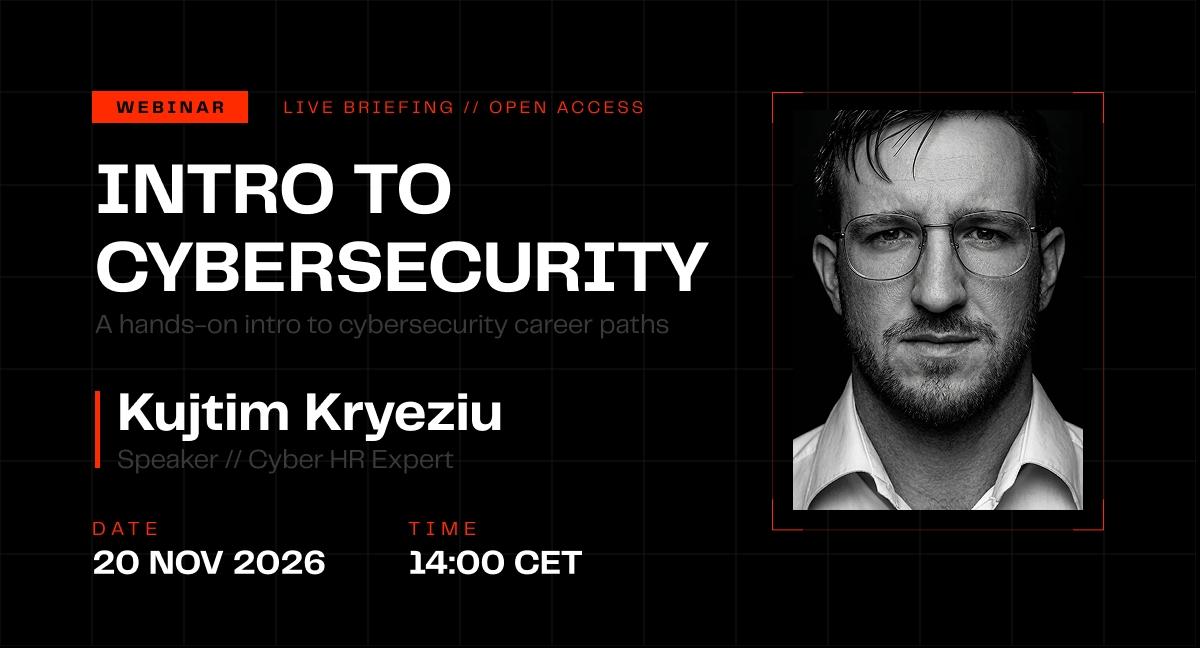
Introduction to Cybersecurity
Performance-based certification validating full-spectrum technical competence.
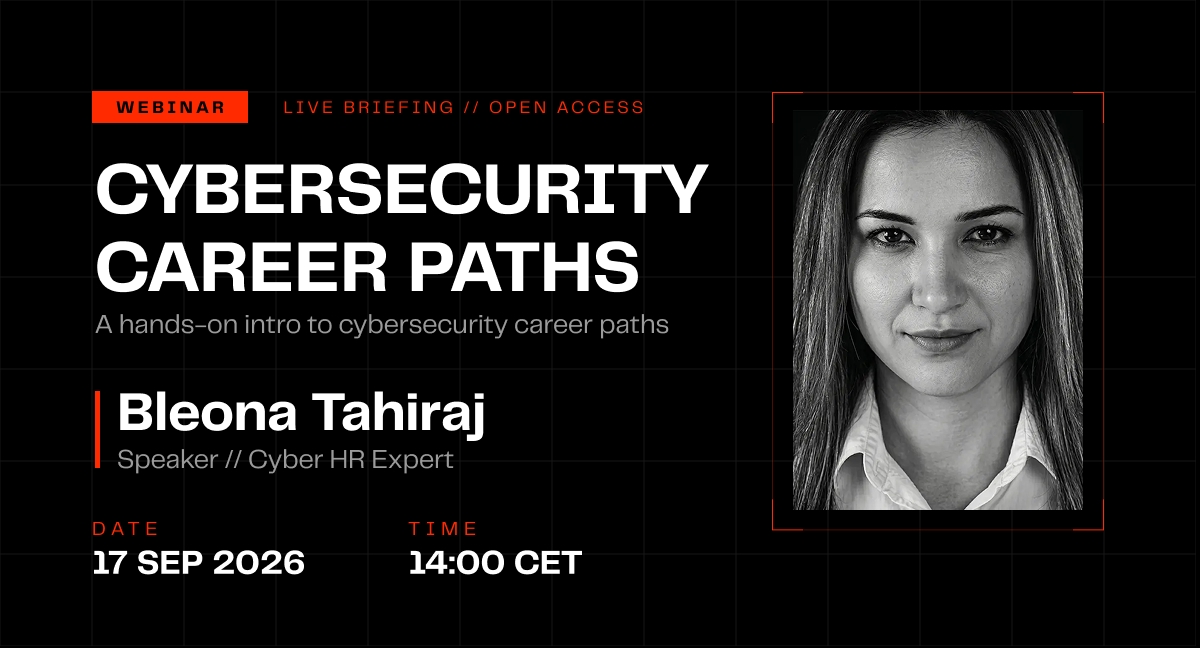
Cybersecurity Career Paths
Performance-based certification validating full-spectrum technical competence.
Networking Fundamentals for Security Professionals
Performance-based certification validating full-spectrum technical competence.
Short webinars on topics that matter. Cyber hygiene, platform walkthroughs, and live practitioner sessions. Pick a topic, show up, learn something.
EXPERT SESSIONS
EVENT
Bsides Porto
Sentry and Cyber Academy brought two talks to Porto. Përparim Mjeku and Rinor Shehu walked the room through CI/CD Rootkitting, while Robert Shala and Armend Gashi presented Special Token Injection. The team spent the rest of the event with the Portuguese security community.
EVENT
Girls in Cyber Security
Girls in Cyber Security Conference was hosted on March 26, 2026 at ICK by the British Council. The activity was jointly organized by two initiatives funded by the United Kingdom: the CybHER project, implemented by the British Council, and the Good Governance in Cybersecurity in the Western Balkans project, implemented by DCAF.
EVENT
BSides Sofia
Armend Gashi and Robert Shala presented our research on Special Token Injections in LLMs to a packed room at the Technical University of Sofia. The talk earned a perfect speaker score, and the Sofia community started building on the research before the event was over.
EVENT
DEFCON 33
Team Sentry traveled to Las Vegas for a week long mission that spanned Black Hat USA and DEF CON not just as attendees, but as presenters, workshop hosts, authors, and community contributors. We launched the ATT&CK book tour, hosted invite-only wargames, previewed STI tooling for friends at Black Hat, and then carried that energy directly into DEF CON’s AppSec, AI, and Adversary Villages.
Conferences, meetups, and briefings where we show up in person.
EVENTS